
Japan has officially broken the fastest internet speed record in the world—hitting a jaw-dropping 1.02 petabits per second (Pbps). That’s more than 1 million gigabits per second, fast enough to download all the content on Netflix in one second!
This breakthrough could change how we use the internet forever.
📈 What Does 1.02 Petabits Per Second Mean?
Here’s why this is a big deal:
- 1 petabit = 1,000,000 gigabits
- 1.02 Pbps = 1,020,000 gigabits/second
- You could download:
- All video games ever made in ~10 seconds
- 127,500 years of music in one second
- All of Wikipedia 10,000 times in a second
🧪 How Japan Achieved This Record
Researchers in Japan set this fastest internet speed record using:
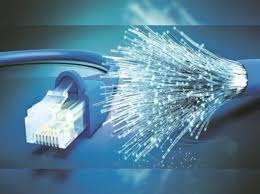
- Multi-core optical fiber (4-core)
- Ultra-wide wavelength bands
- Advanced modulation and compression
- 51.7 km fiber transmission setup
This wasn’t just lab-based—it was tested on long-distance cable, proving real-world usability.
🌍 What This Means for the Future
For Daily Users:
- Instant 4K/8K/16K video streaming
- Full cloud backups in seconds
- No lag for gaming, meetings, or downloads
For Industries:
- Faster AI model training
- Huge datasets moved in real time
- Support for next-gen tech like 6G, VR, and real-time healthcare
🔍 Quick Facts Table
| Feature | Value |
|---|---|
| Speed | 1.02 Petabits/sec |
| Country | Japan |
| Tech Used | Multi-core fiber optics |
| Download Example | All of Netflix in 1 sec |
🧠 Final Thoughts
Breaking the fastest internet speed record isn’t just about bragging rights—it’s a sign of what’s coming next. We’re moving toward a future where “loading time” might not exist.
This record by Japan shows us the real power of fiber-optic technology, and it could soon transform how we stream, play, work, and live.